
Entre Fronteras
Eric Carlos Bertrand
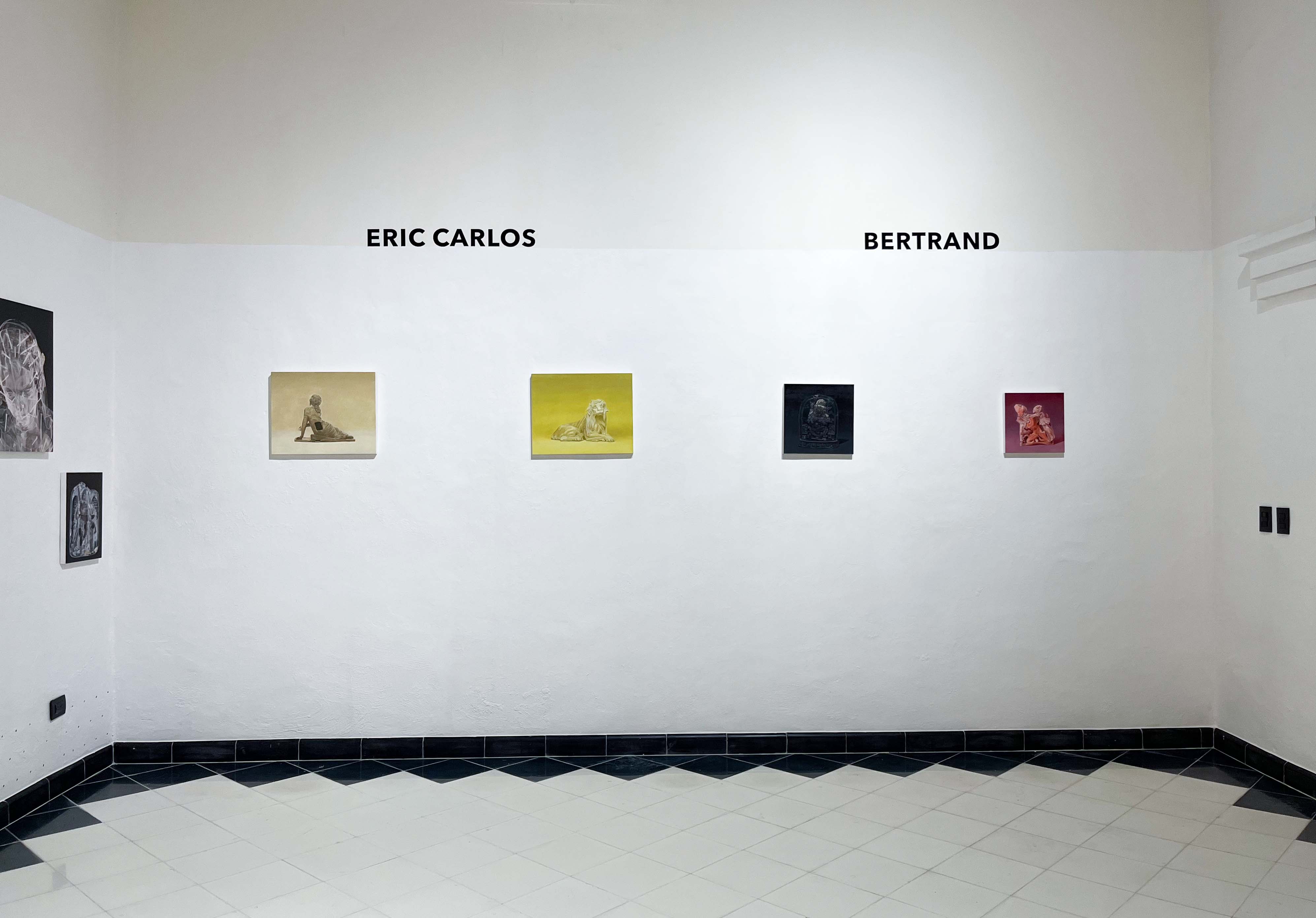
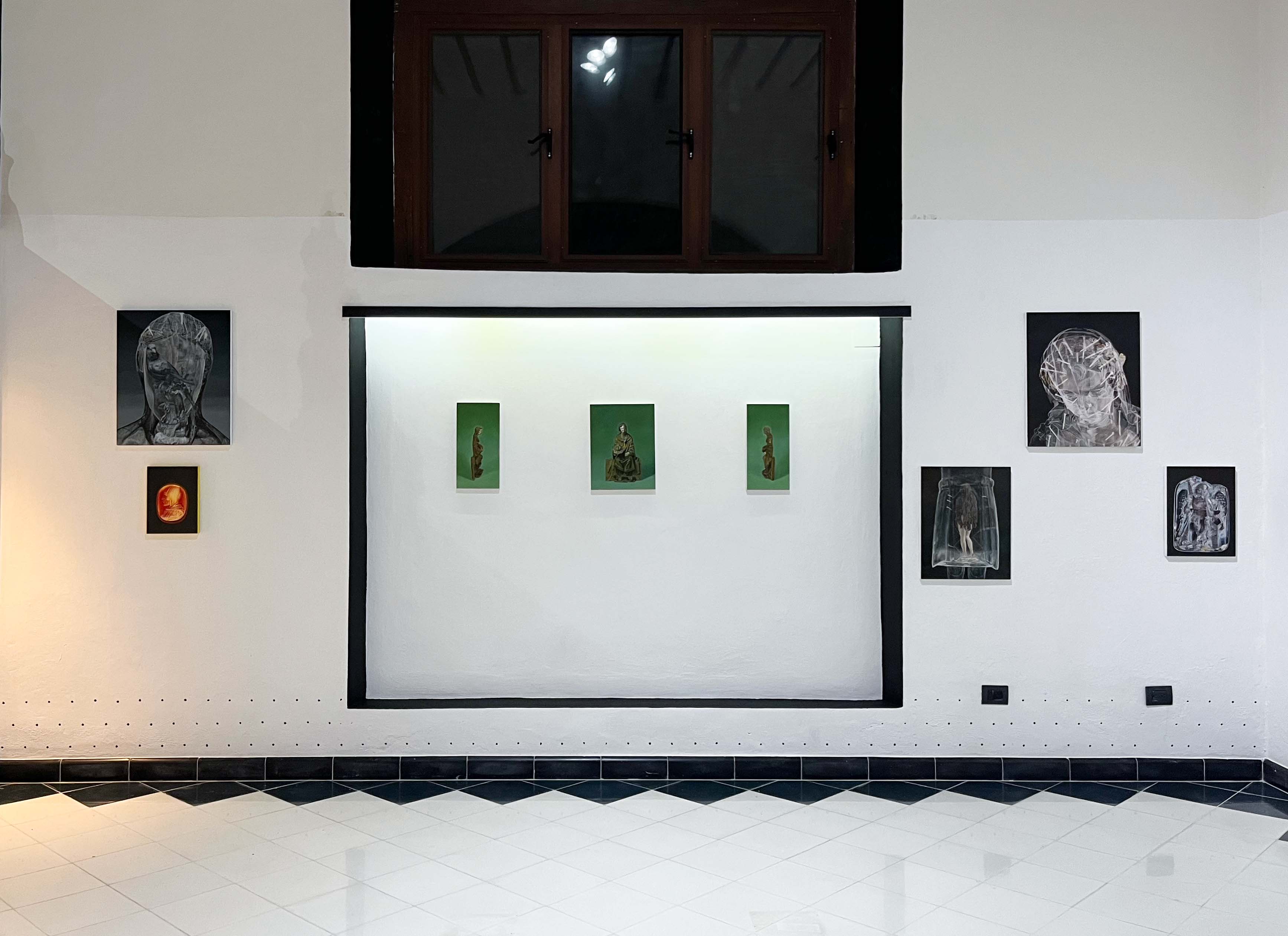
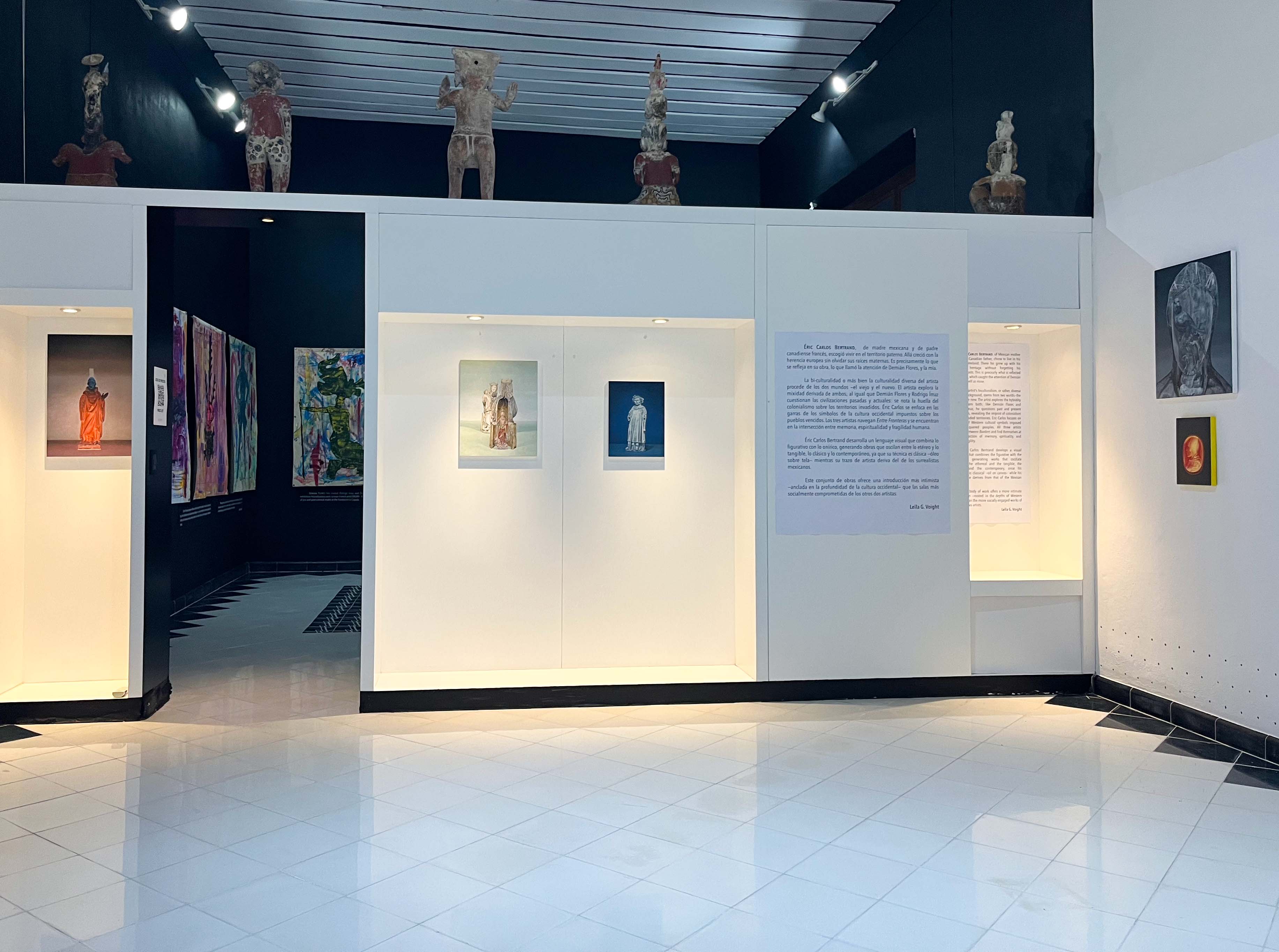
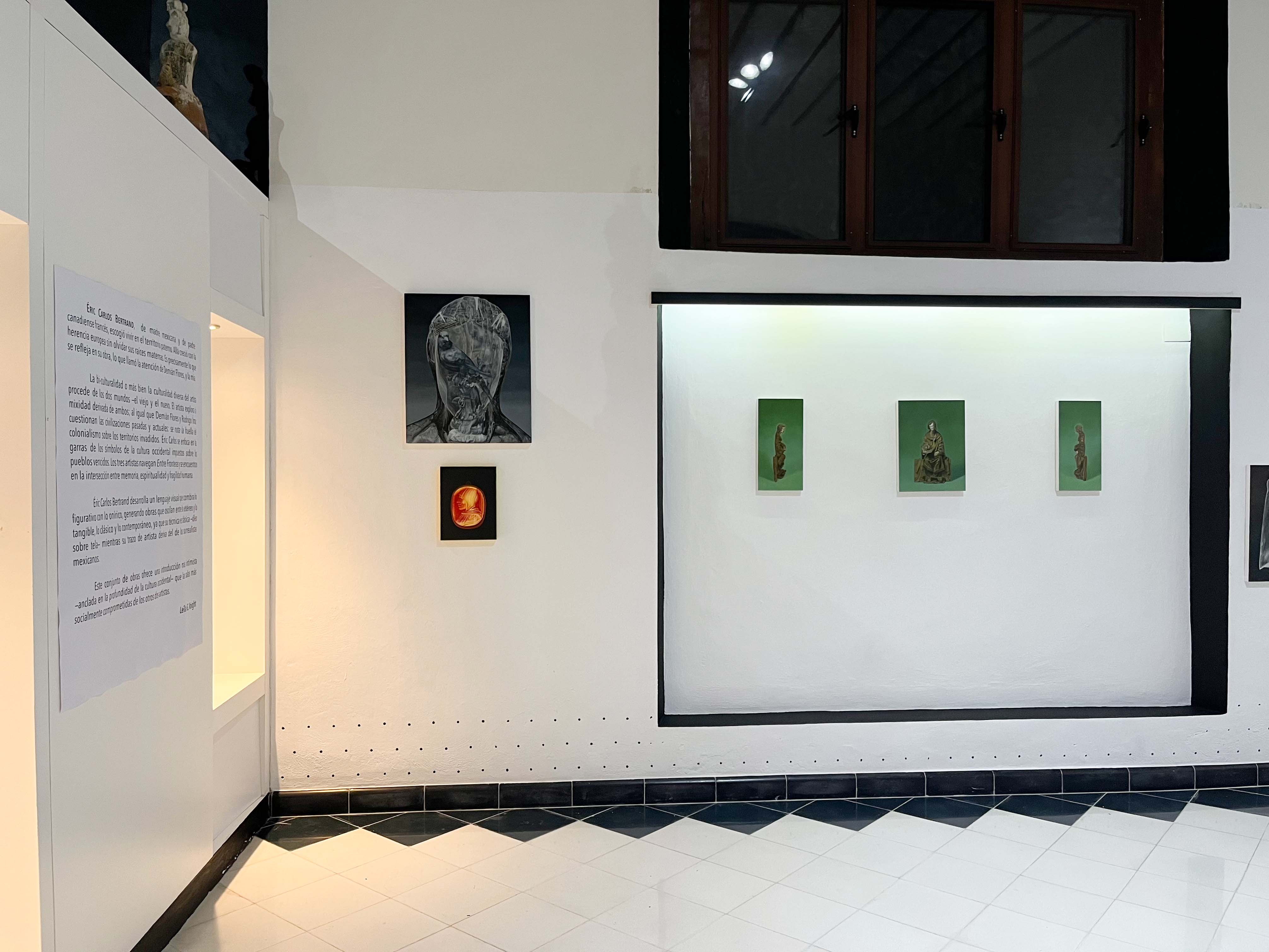
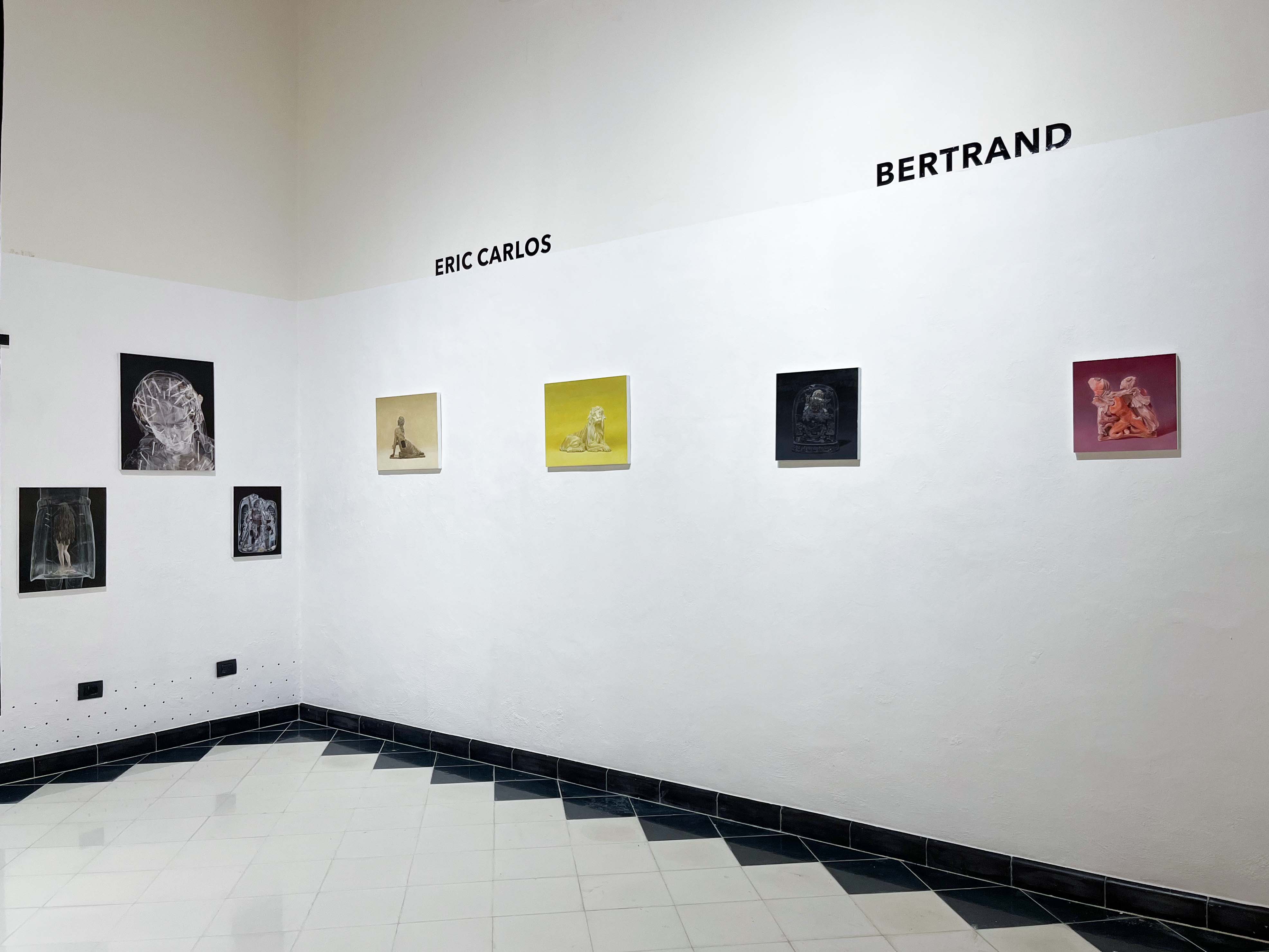
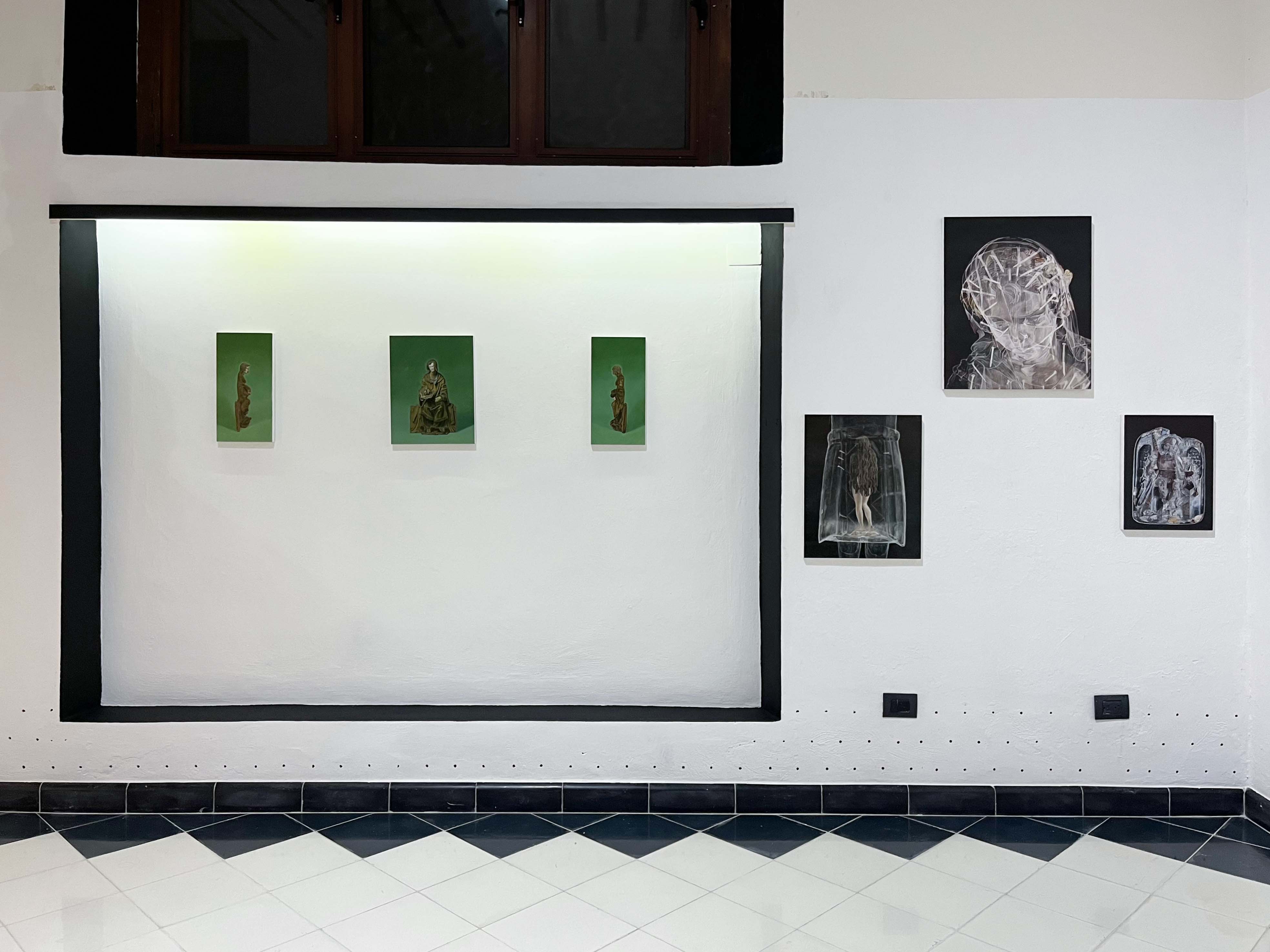
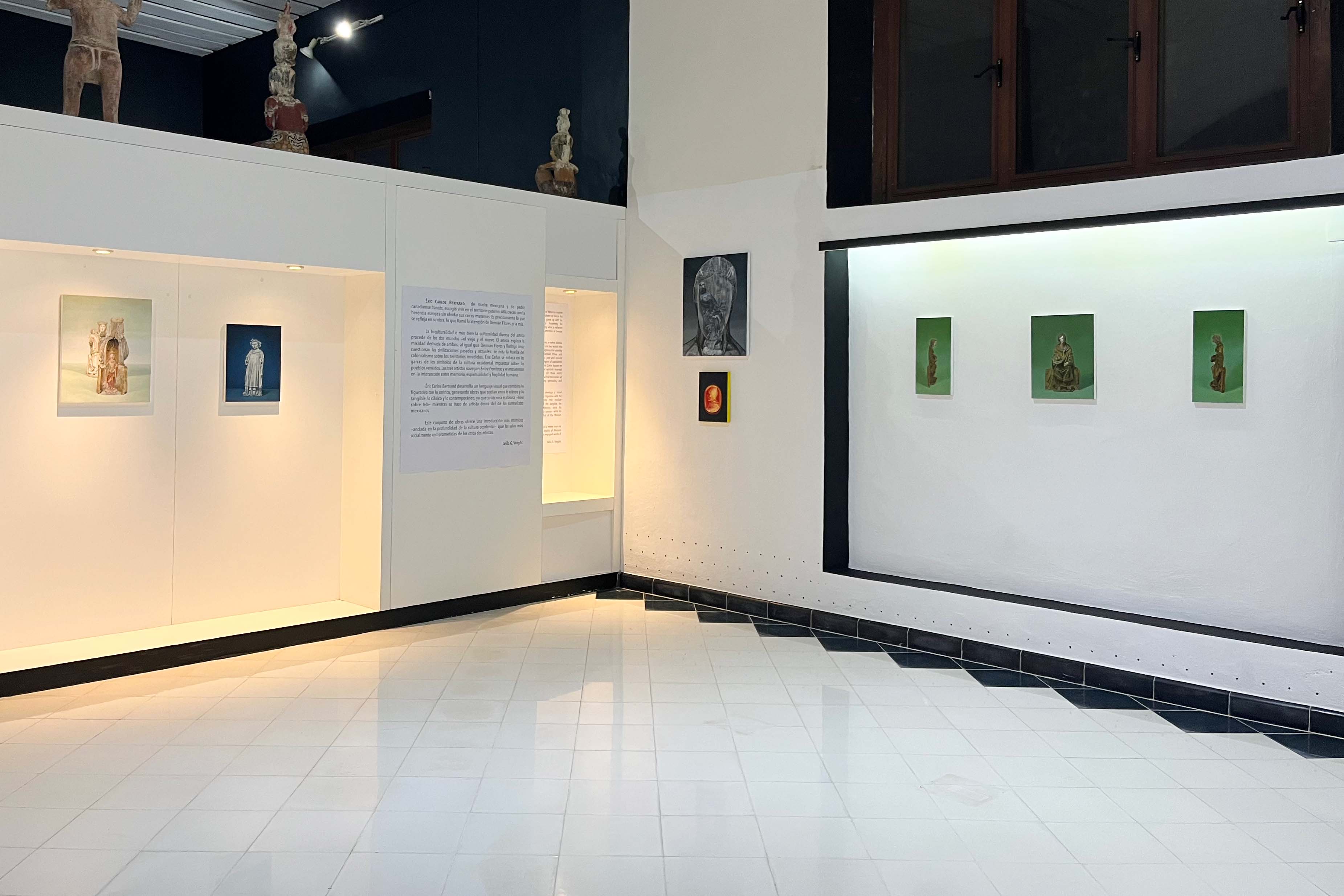
ÉRIC CARLOS BERTRAND, de madre mexicana y de padre canadiense francés, escogió vivir en el territorio paterno. Allá creció con la herencia europea sin olvidar sus raíces maternas. Es precisamente lo que se refleja en su obra, lo que llamó la atención de Demián Flores, y la mía.
La bi-culturalidad o más bien la culturalidad diversa del artista procede de los dos mundos —el viejo y el nuevo. El artista explora la mixidad derivada de ambos; al igual que Demián Flores y Rodrigo Ímaz cuestionan las civilizaciones pasadas y actuales: se nota la huella del colonialismo sobre los territorios invadidos. Éric Carlos se enfoca en las garras de los símbolos de la cultura occidental impuestos sobre los pueblos vencidos. Los tres artistas navegan Entre Fronteras y se encuentran en la intersección entre memoria, espiritualidad y fragilidad humana.
Éric Carlos Bertrand desarrolla un lenguaje visual que combina lo figurativo con lo onírico, generando obras que oscilan entre lo etéreo y lo tangible, lo clásico y lo contemporáneo, ya que su técnica es clásica —óleo sobre tela— mientras su trazo de artista deriva del de los surrealistas mexicanos.
Este conjunto de obras ofrece una introducción más intimista —anclada en la profundidad de la cultura occidental— que las salas más socialmente comprometidas de los otros dos artistas.
Leïla G. Voight
ÉRIC CARLOS BERTRAND, of Mexican mother and French-Canadian father, chose to live in his father’s homeland. There he grew up with his European heritage without forgetting his maternal roots. This is precisely what is reflected in his work, which caught the attention of Demián Flores, as well as mine.
The artist’s biculturalism, or rather, diverse cultural background, stems from two worlds—the old and the new. The artist explores the hybridity derived from both; like Demián Flores and Rodrigo Ímaz, he questions past and present civilizations, revealing the imprint of colonialism on the invaded territories. Éric Carlos focuses on the grip of Western cultural symbols imposed upon conquered peoples. All three artists navigate Between Borders and find themselves at the intersection of memory, spirituality, and human fragility.
Éric Carlos Bertrand develops a visual language that combines the figurative with the dreamlike, generating works that oscillate between the ethereal and the tangible, the classical and the contemporary, since his technique is classical —oil on canvas— while his artistic style derives from that of the Mexican Surrealists.
This body of work offers a more intimate introduction —rooted in the depths of Western culture— than the more socially engaged works of the other two artists.
Leïla G. Voight